art, Obedience

What If … Obeying God

In the last post, I shared a creative process. I made up a game called “What If…” What if I just sat down to paint? What if I just made some marks? What if I mixed green and orange together? What if I tried something new or different? So I did. I sat down to paint and play and try some new art supplies. And I surprised myself.

When I was done, I actually liked what I painted. Was it perfect? No. Could I make improvements? Of course. Then I began to think. What if? What if I took more risks, more chances? What if I was more in tuned to hearing God’s voice? What if I was and obeyed Him? I guess this is where I began to reflect on areas in my life where I am hesitant to obey, not hearing to obey or just not obeying.

My intention in my artistic exercise was to paint, to stop procrastinating and do what brings me joy. It wasn’t to make a perfect piece of art, it wasn’t for anyone it was for me. Sometimes I find it hard to find time to do just this, paint. Once I began to evaluate what I was doing with my time, I began to see pockets of time with which to create. I really need to keep time limits on scrolling social media. When scrolling takes away from what I need to do and what I enjoy doing, it becomes an issue. Now, when I find I have an idol moment, if there is nothing pressing on my to do list, I choose to do something artistic. This takes a bit of practice, training, discipline.

When it comes to obeying God I believe the same can apply. It takes training, practice, discipline. I first need to actually recognize His voice and I can’t do that if I’m not reading His word daily. What’s my intent when I read my Bible? Like when I sit down to paint, why am I doing this? My intent is to hear God’s voice so that I can obey Him. Sometimes I feel like I’m not obeying because I’m not sure I am hearing His voice. John 10:27 – “My sheep hear my voice, and I know them, and they follow me:” and there’s more, a promise, a blessing verse 28 “And I give unto them eternal life; and they shall never perish, neither shall any man pluck them out of my hand.”

Sometimes I feel like I am missing out on some things, blessings, because I am not paying attention to the God’s voice. God knows my heart. So when I am earnestly trying to do what I think He wants me to do in a situation or even in the slightest seemingly, smallest thing I know He sees me trying. Many times I fail. He might be telling me to reach out to someone and I may be hearing a voice that says “don’t disturb them.” Or it could be buy extra food at the grocery store and I hear, “you’re on a budget.” If God is telling me to buy extra food, it’s not for us. It’s for someone else. There have been times my husband has come home from work and asked if I could pick up some extra cans of soup, granola bars or cereal for the food closet at work and I listened to the voice that told me I was on a budget. Ugh!

Now that I have recognized this pocket of time, I need to act on it and paint or draw. Take the risk. Recognizing God’s voice is still a work in progress. When I recognize it I need to obey it. Take the risk. That’s a risk that will always give a return on investment. I can’t lose. I can’t loose by making messy art, I can still learn. It may not be pretty but I will walk away learning to do something or not do something. By obeying God, I really can’t lose. Even if I mess up somehow, God will work out my mess, Romans 8:28, “And we know that in all things God works for the good of those who love him, who have been called according to his purpose.”

What if…, what if I stopped procrastinating and painted or did something creative everyday? What if I stopped to hear God’s voice everyday and obeyed? What if…?
Uncategorized

What If …

My Painting Process

Last Saturday morning the weather was inspirational. It’s getting warmer, trees and flowers are blooming again and it was a sunny day. How could I not be inspired? Nature always inspires me and today it was shouting.

Like many times, I don’t know what to do. As inspired and motivated as I can be sometimes, what to do can be overwhelming. Have you been there? I decided to make a little game of it, and asked myself, “what if?” What if I actually painted something! You’ll hear many artists’ encouraging words to just make marks, put paint on paper, or ink, or whatever medium you are using. Just do something, even if it’s not perfect or you don’t like it, or you fail, just do something, be creative. That’s what I did.

My initial doodle

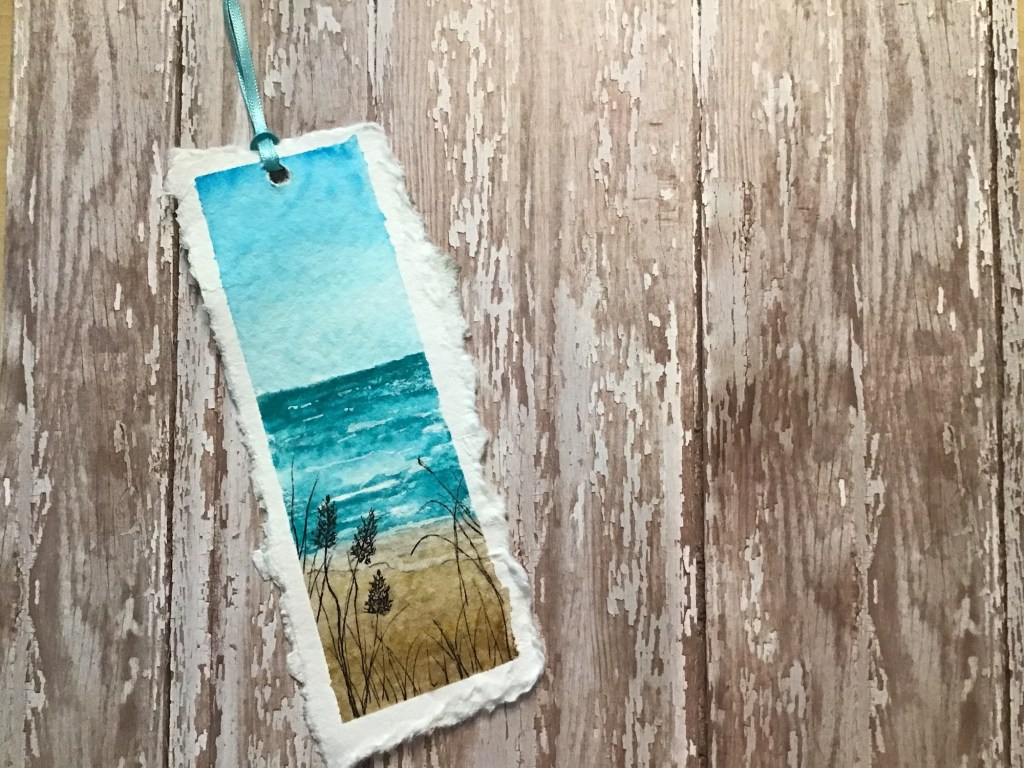
When I do a piece that I don’t like or it’s a flop, I keep it but not for display. I recycle it. I keep it to use the other side for a do over. And that’s what I did here. I grabbed a large piece of watercolor paper and some watercolor brush pens and just started to make a small gradient . That’s it. Step number one of the “What If” game; keep it small, keep it simple. It’s more manageable, less intimidating. My next thought was to make a bookmark. I had purchased a book a few months back that had instructions using watercolors to make a bookmark and the warmer weather was making me think of the beach. I chose three-ish or so colors and started painting a sky, water, and sand. My first attempt looked flat, uninteresting. I tried again. This time I let the brushes do the work, I let them leave their marks and color. The look was starting to take shape and look more interesting. I could have left it there. But I didn’t, it needed more.

Head over to my YouTube channel for other videos

Then the question came again, “what if?” What if I took some white and enhanced the waves and water just a little? Aha! It’s looking more like water. Using what I have learned about making water on the shore, is to create a shadow under the water flowing over the sand. Thus the second step; build up or layer creativity on your painting. Add to it but carefully. A little can be a lot. It still need a little more but it was starting to gain more dimension. It needed a more and it needed contrast. I took a black fine liner and started to make some tall grass in the foreground.Then, I took a step back and it actually looked like a beach. That’s when I stopped. Of course now I see things I can do different, like make some clouds but the cloudless sky give me the opportunity to maybe write a quote over it.

That’s becoming my process as I learn. I ask myself the question, “what if …? and do it. Next, I break it down, keep it simple. My high school math teacher always told us to reduce our problems to lowest terms. So, keep it simple and small. Then I layer on creativity, I build on top of the simple image I created, with some detail using other media, asking myself again; “what if …”. And then I step back. Maybe there is more I need to do. Maybe it is done, but I step back and assess. Maybe I need to leave it, let it be silent for a few days to make sure it’s done.

As I let this little project sit overnight, that inspiration is kinda like God’s voice. It nudges, it encourages. Once again I asked; “what if …”. Don’t go away, stay tuned for next week as I explain that.

Would love to hear what inspires you and hear your process. Please be sure to like, subscribe, comment and share. As always, “Anchor in Hope.”

art

The Who of Greeting Cards

This is a real brief history. I won’t bore you with all the details so I’ll leave a some links for further reading.

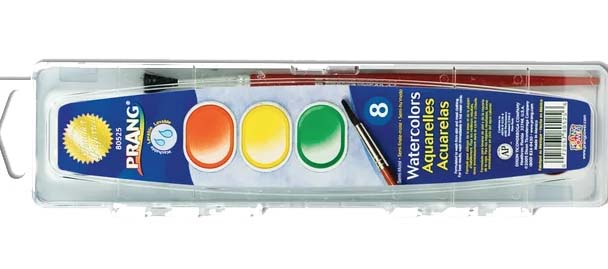
You may or may not be familiar with Prang or Prang products. And you may be thinking what does this have to do with greeting cards. It was Louis Prang, born on March 12, 1824 in Prussian Silesia who was the son of Jonas Louis Prang, a Huguenot textile manufacturer. He was the apprentice to his father and learned engraving, printing and calico dyeing.

In Paris, during the mid 1800’s, Prang met and fell in love with his wife Rosa Gerber, a beautiful Swiss woman bound for Ohio where they started a family and had one daughter. In 1851 he and Rosa were living in Boston where he began to work for an engraver Frank Leslie. Later in 1856, Rosa encouraged him go out on his own and works with a partner creating lithographs of buildings and towns in Massachusetts.

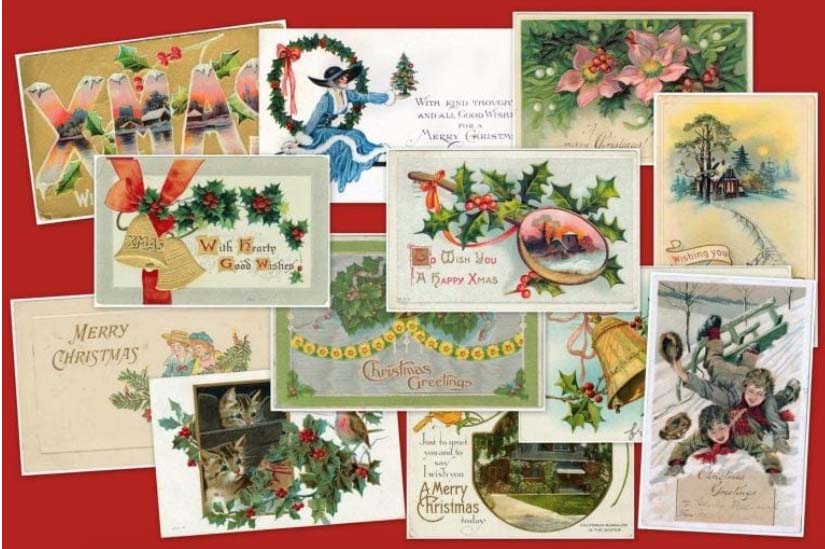
Louis Prang sometimes known as “The Father of The American Christmas Card” was an award-winning Boston lithographer/inventor who, in 1873, reproduced a holiday card autographed by Christmas Carol author, Charles Dickens. Louis Prang printed his first Christmas cards in 1875 and brought them to London. The Christmas cards were a big success. The following year, he sold them in the Northeast of the US . It still took two more years before he had the corner market in the United States. By the late 1800’s, he printed more than 5 million Christmas cards a year.

I was today old when I learned Louis Prang was the Prang behind Prang products. I mean I didn’t know Prang was an actual person, not just a product. Though he still produced greeting cards and occasionally gave tours in his Prang Lithographic Factory in Roxbury he contributed to art education. So in 1875 took a step into art education where he found his true passion. It was as a public service he manufactured art materials and supplies.

Prang closed his lithographic factory in 1897 in Roxbury. He merged his company, The Louis Prang Company with the Taber Art Co. of New Bedford. He continued to produce and still produces high-quality work and made child-safe art materials. Those famous Ticonderoga pencils also known as Dixon Ticonderoga, purchased the right to his art materials in 1909. (At the time of this merger, Ticonderoga was known as the American Crayon Company). Louis Prang later died in 1909. Who knew?

For Further reading:

Prang.com

Prang Catalog

Prang History

History of Greeting Cards

Uncategorized

Greetings From Ancient China and Egypt

Happy National Greeting Card Month! The history of greeting cards is interesting and I wanted to share what I discovered. But as I was researching I was trying to decide how to communicate what I found. If you’re like me you want the highlights and some interesting details. So I thought I would deliver what I discovered by answering some questions over the course of a few days.

The history of sending greeting cards go back to ancient civilizations of China and Egypt. These tidings of goodwill and well wishes were exchanged often on papyrus scrolls in Egypt and similarly precious materials in China. These greetings were offered as messages of goodwill but also served as symbols of status and prosperity.

As paper was starting to be manufactured, the tradition and practice of sending good will messages began to evolve. Beginning in the 15th century, the Europeans began sending hand made cards from paper. This really is a lost art. Germany is credited with creating the first Christmas cards. Paper wasn’t as plentiful as it is today and wasn’t easy for everyone to obtain. So it was mostly tradition among the wealthy and noble. Their cards were embellished with gold leaf, flourished with intricate designs and warm heartfelt messages.

It wasn’t until the 19th century that greeting cards were mass produced. We can thank Sir Henry Cole, in 1843 he commissioned the first commercial Christmas card in London. Word has it it featured a festive scene and the greeting “A Merry Christmas and a Happy New Year to You.” This marked the beginning of the $23 million mass-produced greeting card industry we know today!

It’s been a few centuries since the first greeting card in ancient China and Egypt. And though technology may have slowed things down, the industry is still thriving. Head over to my YouTube channel to make a quick and easy “thank you” card to send.

How do you feel about the cost of greeting cards? Leave your thoughts in the comments.