
encouragement, healing, hope

When Life Doesn’t Go as Planned: The Potter and the Clay — Part 2

What Do We Do When Life Doesn’t Turn Out How We Expected?
©The Kedge Anchor 2026

Last week, we followed a lump of clay through the hands of a potter.

We watched as the clay was pounded and kneaded, shaped and formed on the wheel, placed on the shelf to dry, and eventually fired in the kiln.

When the potter took the finished piece from the kiln, it was ready for its intended purpose.

But the potter wasn’t finished creating.

He decided he wanted another pot.

This one would be bigger and taller, able to accommodate the flowers bursting from his garden. He wanted it to complement the first pot while adding more contrast to the room with a different shape and color.

The potter began working on the second pot.

He pounded and kneaded the clay, removing the air pockets. Then he placed it on the wheel and began to shape it.

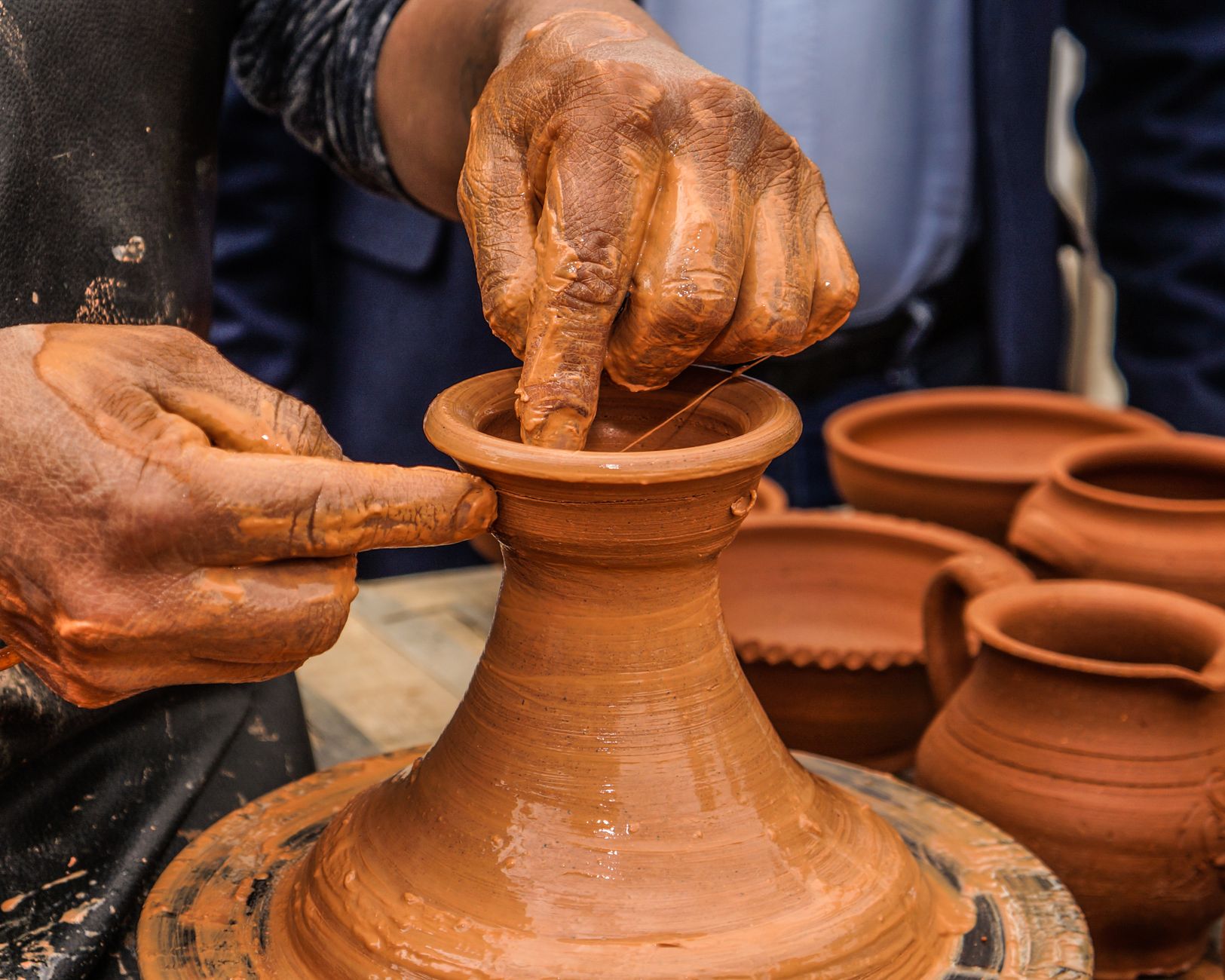
His hands worked the clay, adding pressure and water as he formed it. He opened the center, pulled the clay upward, carefully formed the walls, shaped the lip and smoothed the edges.

When he was satisfied with the shape, he lifted the pot from the wheel and placed it on the shelf waiting for it to dry.

Days passed.

When the pot was completely dry, the potter placed it in the kiln for firing.

After the firing was complete, he waited for the kiln to cool before carefully removing the pot.

It was beautiful.

It was exactly what he had envisioned.

He filled it with flowers from his garden and placed it in the room beside the first pot.

But one day, the second pot was accidentally fell over.

It fell hard.

And it broke.

The potter gathered the pieces.

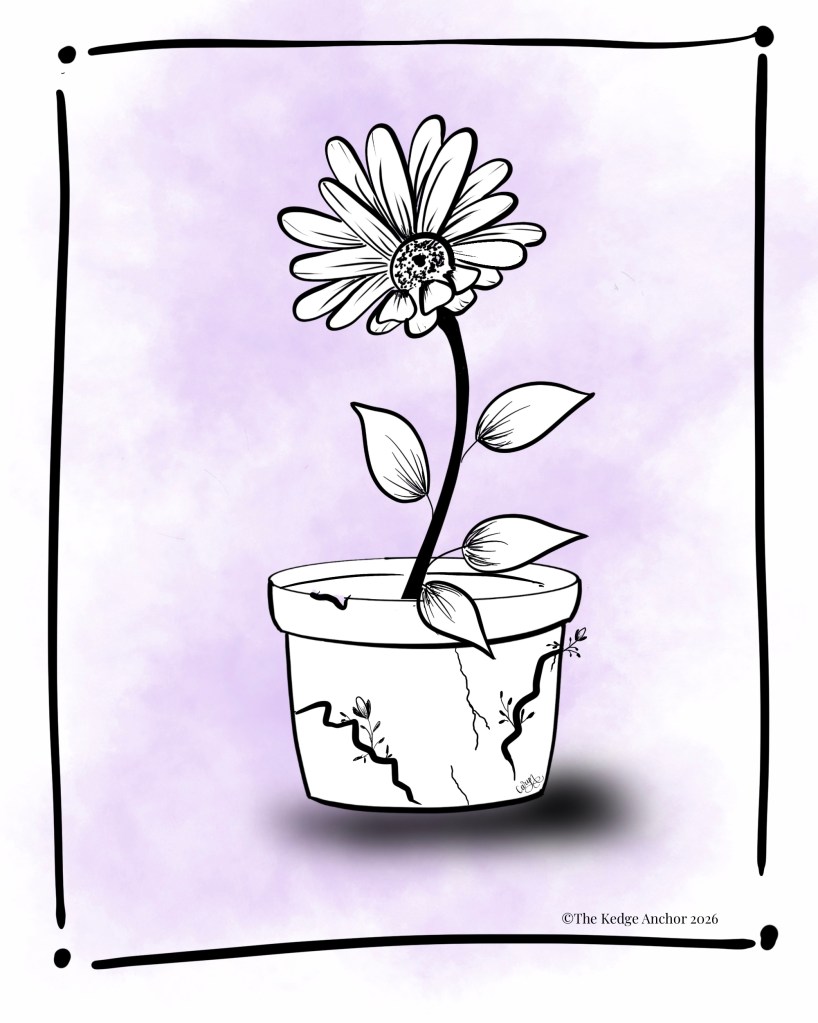
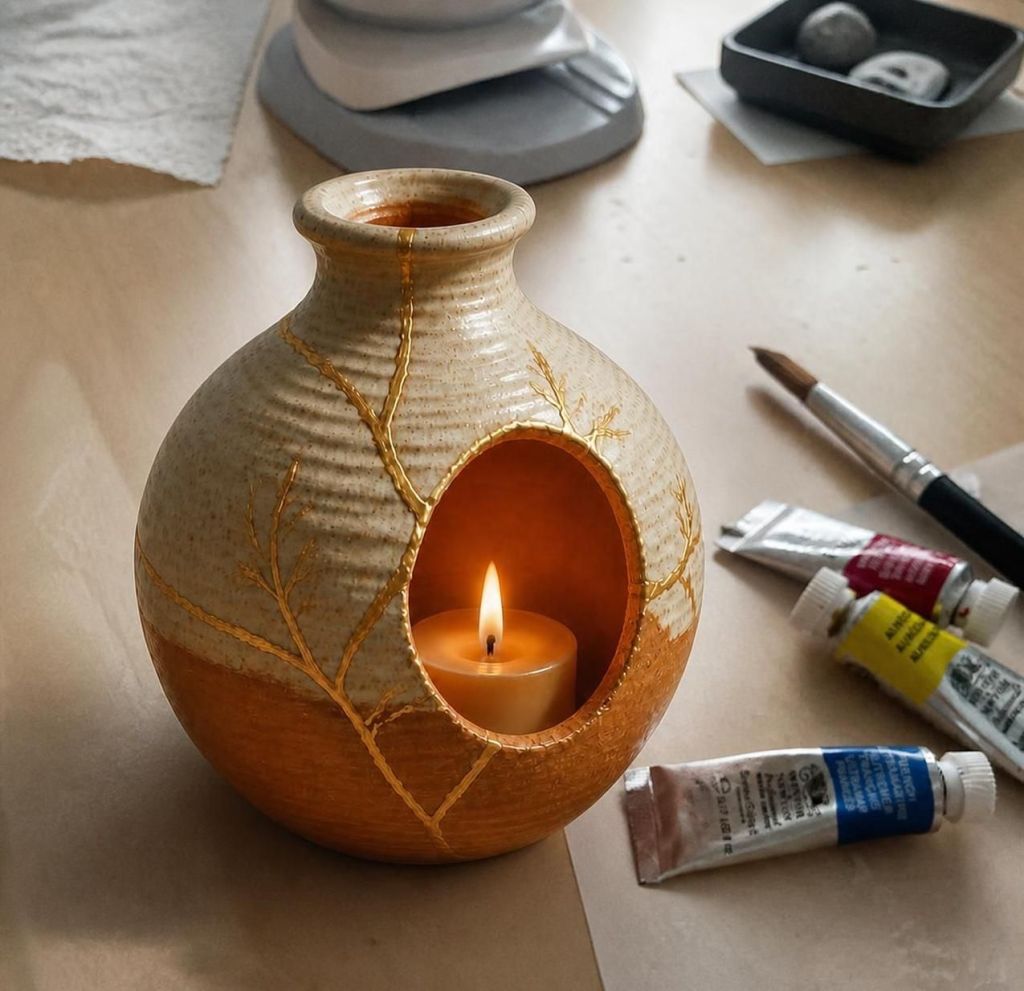
He carefully examined what was left and began putting the pieces back together. Some pieces fit perfectly. Others required more work, a little sanding here and there to smooth some rough edges. He arranged the pieces so that a hole was right in the center.

The cracks from where the pot had broken created beautiful lines. The potter painted those cracks with gold paint and added some leaves, creating a vine that wound its way around the pot. The broken pieces had become part of its beauty.

When he was finished, the pot wasn’t exactly the same as it had been before.

There were places where the broken pieces had changed its appearance. But the potter didn’t see it as ruined.

The candle’s light shone through the places where the pot had been broken and repaired.

The pot had a new purpose.

And perhaps that’s something worth remembering.

Stay tuned for Part 3. There’s more to this story.

encouragement, hope, Stress, Trust God, Uncategorized

The Potter — Part 1 – When God Is Shaping Your Life: The Potter and the Clay

© 2026 The Kedge Anchor

Understanding the Process When Life Doesn’t Look Like You Expected

When God created us, He had a purpose in mind.

I think about an artist creating a piece of art. An artist is usually inspired by something, and before the first brushstroke or pencil line is made, there is often a plan—a design and a purpose.

Sometimes the purpose is simply to add beauty. Sometimes it’s functional: a bowl to hold something, a cup from which to drink, a vessel to hold flowers, or a lamp to carry light.

God uses the imagery of a potter and clay to describe our relationship with Him:

“Yet you, LORD, are our Father. We are the clay, you are the potter; we are all the work of your hand.”
— Isaiah 64:8 (NIV)

God formed us in His image:

“Then God said, ‘Let us make mankind in our image, in our likeness…’”
— Genesis 1:26 (NIV)

And Scripture tells us that God has plans for us:

“For I know the plans I have for you…”
— Jeremiah 29:11 (NIV)

Think about a potter sitting down at the wheel with a lump of clay.

Straight out of the package, the clay doesn’t have much aesthetic form. It’s soft and pliable, and because it is soft, the potter can shape and mold it.

But before the potter begins, there is already a plan, a design, and a purpose in mind.

The clay is placed on the wheel and the process begins.

It is slapped down onto the wheel and pounded. It is kneaded, much like bread dough, to get the air out. The potter works the clay for a few minutes, and as the clay is kneaded, it becomes warm and softer.

Then the clay is placed back on the wheel.

The wheel begins to turn.

The potter wraps his hands around the lump of clay and begins to give it form.

Sometimes the clay begins to dry from the friction of the potter’s hands. So the potter wets his hands and adds water to the clay, continuing to shape and form it.

Then comes the pressure.

The potter applies pressure from the top, opening up the center and hollowing out the inside. Pressure from certain points on the outside creates grooves and curves, giving the piece its shape and character.

The potter forms the lip and smooths the edges. He gives the piece one final spin, checking it and looking it over.

The wheel stops.

The potter takes a piece of string, slides it underneath the newly formed pot, and lifts it from the wheel.

The pot is taken to a shelf with other pieces to dry.

And now…nothing seems to be happening.

The clay has already been through a lot—pounding, kneading, spinning, pressure from all sides, pressure from the top, being hollowed out and shaped.

Now it simply rests.

Days pass.

Other pieces come and go, but this one remains on the shelf, waiting until the potter is ready.

Then the potter takes it down.

It is dry.

It is ready for the kiln.

The temperature inside a kiln can reach more than 2,000 degrees Fahrenheit, and the pot may remain there for hours. The firing process is intense, but when it is complete and everything has cooled, the potter takes the piece out and prepares it for its intended use.

And I can’t help but think about how it is with us.

How many times have we felt like that lump of clay?

Pounded.

Pressed.

Shaped.

Emptied.

Stretched.

Waiting.

Maybe you’ve been in a season where it feels like God is doing something in your life, but you don’t understand what He’s doing.

Maybe you’ve experienced pressure from every direction.

Maybe you’ve felt like you’ve been emptied out.

Or maybe you’re in that place where nothing seems to be happening at all.

You’re just waiting.

But the clay doesn’t know what the potter is making.

The potter does.

God sees what we cannot see.

And maybe that’s where Romans 8:28 begins to take on a little more meaning:

“And we know that in all things God works for the good of those who love him…”

Not everything that happens to us looks or feels good.

But God can work through all things.

The clay has no idea what it will become.

It only knows what it’s experiencing right now.

And sometimes, I think we’re the same way.

So pause for a moment and think about your own brokenness.

Where has it brought you?

How have you healed?

Maybe you haven’t healed yet.

Maybe you’re still in the process.

There is hope.

And there is more to this story—because there is more to our brokenness than we may realize.

Stay tuned for Part 2.

encouragement, hope, Trust God

Finding God’s Faithfulness in Creation

Finding reminders of God’s faithfulness in the world around us

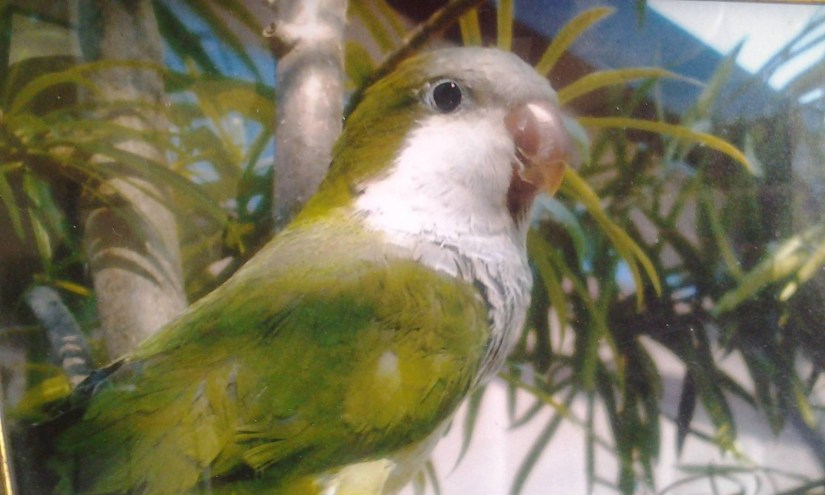
This is Teemu. She was barely a year old in this photo. She’s 28 now.

Have you ever wondered if God sees you? Have you felt like your prayers seem to go unanswered, your circumstances don’t make sense, and you wonder if God is paying attention? You’re not alone. Many of us have been there. I know I have. And that doesn’t mean we don’t have faith. Questions and struggles do not mean a lack faith. But we don’t have to remain trapped in doubt.

Creation reminds us that God is faithful. The birds do not wake up each morning wondering if God will provide. The squirrels in our yards do not worry about where their next meal will come from. They simply do what God created them to do, and He cares for them. Matthew 6:26 – “Look at the birds of the air; they do not sow or reap or store away in barns, and yet your heavenly Father feeds them. Are you not much more valuable than they?” (NIV).

Now, does that mean we will never have worries? Of course not. Job had plenty of worries. He lost his family, his health, and everything he had. He questioned, he grieved, and he struggled to understand what God was doing. But even in the middle of all that pain, Job came back to the truth that God was still in control. God is sovereign.

Job knew what it felt like to question God’s plan. He experienced deep loss and pain, yet even in his questions, he looked at creation and recognized God’s wisdom and power. He said, “Ask the animals, and they will teach you, or the birds in the sky, and they will tell you; 8. or speak to the earth, and it will teach you, or let the fish in the sea inform you.” (Job 12:7-8 NIV).

When we see the birds, the animals, the changing seasons, and all the things He has created, we are reminded that God is faithful. The same God who watches over the smallest creatures also watches over you.

My cuddle bug

Sometimes we want God to explain everything before we trust Him. We want to know the why, the when, and the how. But trust doesn’t work that way. Trust means believing that even when we don’t understand what God is doing, He understands our humanity. He knows our struggles, our questions, and our limitations. But God is still good, He is still present, and He is still in control. He most likely is using the very situation, the very season to draw you closer to Him.

God created the earth, the animals, and us, and He called it all good. He gave us the responsibility to care for His creation. The same God who cares for the birds, the fish, and all of creation cares for us too. He loves us. We are His creation.

So the next time you hear the birds singing or see the squirrels running around, maybe take a moment to remember: the Creator who cares for them is the same Creator who cares for you.

anxiety, encouragement, hope, Stress

Finding Hope in Life’s Storms: Your Guiding Light

Exploring the lighthouses God provides to help us navigate difficult seasons.

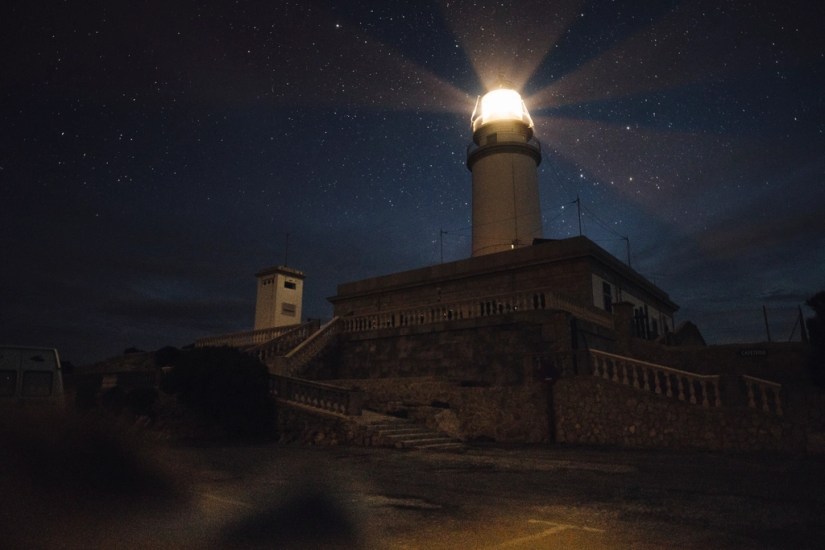
As I’ve been reflecting on the storms we all face at different times in our lives. I was reminded of something I wrote a couple of years ago about the lighthouses God provides along our journey.

Life’s storms can leave us feeling lost, overwhelmed, and unsure of our next step. But even in the darkest moments, God is faithful to provide reminders of His presence, His guidance, and His love.

Imagine you are out at sea on a stormy night..

The sky is dark. There are no stars shining above to guide you. Waves are crashing around you, tossing you back and forth, and there is no land in sight. For a moment, everything feels hopeless.

Then, in the distance, you see a light.

A lighthouse.

A steady beam shining through the darkness, guiding you toward shore and safety. You let out a sigh of relief. You feel encouraged. You realize, “I’m going to be okay.”

When you finally reach the shore, the fear begins to fade. The storm may still be raging, but you know you can make it through.

Have you ever felt like you were in that storm?

I know I have.

Some storms of discouragement have been brief squalls that passed quickly. Others have lingered, leaving me feeling tossed and battered by my own thoughts or by circumstances happening around me.

During those seasons, I need something to help me. Sometimes I need someone to help me.

Whether the storm is passing quickly or seems to have settled in for a while, we all need encouragement during difficult seasons.

So I want to ask you:

Who or what do you turn to when you are navigating stormy waters? What helps you find your way when there seems to be no light, no stars, and no clear direction? Who or what are your lighthouses?

I want to make it clear: I am not a counselor, and this blog is not a substitute for professional mental health care. However, our mental, emotional, and spiritual health matter. This is simply a place of encouragement where I share things that have helped me during difficult seasons.

If you feel you need to speak with a professional counselor, I encourage you to seek one who can provide the support you need.

Over the next few posts, we’ll explore some “lighthouses” that can help us find encouragement, wisdom, and hope during life’s storms.

Lighthouse #1: Trusted Friends and Family

God created us for community.

There are times when we need to reach out to others and allow them to walk alongside us. Having a support system is not a sign of weakness; it is part of how God designed us.

For many years, there has been a stigma around mental health struggles and seeking help. Thankfully, that stigma is beginning to fade. More people are recognizing that reaching out for counseling or support during difficult seasons is not a failure — sometimes it is a wise and courageous step.

It is okay to feel sad. It is okay to feel angry, anxious, or discouraged. God created us with emotions, and He understands what we experience.

He is not surprised by our struggles. He is not angry when we feel overwhelmed. He invites us to pour out our hearts to Him.

Jesus understands our emotions because He experienced them Himself. In the Garden of Gethsemane, the night before His crucifixion, Jesus experienced deep sorrow and anguish (Matthew 26:36-46). He understands you because He created you.

More importantly, He loves you and wants to help you.

“For God so loved the world that He gave His one and only Son…” — John 3:16

Sometimes people try to encourage us by saying, “You just need more faith.”

But faith is not about never struggling. Jesus only asks for faith as small as a mustard seed (Matthew 17:20). Even in moments of doubt, He meets us where we are.

“Lord, I believe; help my unbelief!” — Matthew 9:23-24

“God is our refuge and strength, a very present help in trouble.” — Psalm 46:1

At some point, we all face discouragement, anxiety, or seasons where we feel overwhelmed. Feeling this way does not mean you are weak or that you lack faith.

But we do need to be mindful of where those thoughts lead us. We have an enemy who wants us to doubt God’s goodness and believe we are alone. That began with the deception of Eve in Genesis 3.

You are not weak because you need encouragement.

Sometimes we simply need a lighthouse.

Sometimes we need someone to remind us that we are not alone.

Who is part of your support system? Who can you reach out to when the storm gets rough?

And if you find yourself without that support, consider finding a local Bible-believing church where you can build relationships, serve, and become part of a community.

And if you know someone who may be feeling lonely or discouraged, reach out. A simple message, prayer, or conversation may be the light they need in the middle of their storm.

In the posts to come, we’ll continue exploring the lighthouses God provides to help us navigate the stormy seas of life.

This post was inspired by “Wisdom for Mental Health” from YouVersion.

hope, Trust God

Be Careful Where You Put Your But.

Photo by Andreea Andrei on Pexels.com

Have you ever heard someone give you a compliment and then add the word “but”?

“You did a great job, but…”

“I appreciate what you did, but…”

Suddenly, everything before the “but” seems to disappear. One little word has the power to shift our focus from what was good to what was lacking.

I never expected a simple word to teach me something about my faith. But as I started paying attention to how we use the word “but,” I realized it can reveal more than just our communication style—it can reveal where we place our trust.

Because sometimes we do the same thing with God.

“I trust You, but…”

“I know You are faithful, but…”

“I believe You will provide, but…”

Our “but” can become the place where fear, doubt, or the need to control creeps in.

The word itself isn’t the problem. It’s what comes after it. There is a big difference between “God, but…” and “But God…”

One keeps our focus on the obstacle. The other reminds us that God is greater than the obstacle.

Didn’t set out for this post to become a lesson in communication but there is something to be learned here spiritually as well. I was talking with someone a few weeks ago. If I remember correctly the topic was about planning. The person I was speaking with was concerned that not enough planning had been done for something. So I suggested, just trust God it will all work out. The reply was, “Trust God but…” that’s where I had to interrupt. Trust God but. Oooo, that’s dangerous. It sounded like God wasn’t big enough. We have a big God who sees the big picture. We have a God that goes before us and paves a way for us. We can plan six ways to Sunday, we can make all the plans we want BUT GOD, directs our steps. “A man’s heart plans his way, But the LORD directs his steps.” Proverbs 16: 9.

Check out this article.

See how this can be applied spiritually? Man can plan BUT the Lord directs. The “but God” negates whatever we plan. That’s not to say we shouldn’t, we should plan, BUT GOD will directs our steps and provide. And if for some reason if we have done all we think we can do to plan for something, we as humans can forget, we aren’t perfect. God will provide whatever it is we may have overlooked, He will make it work. Because, Romans 8:28 – “And we know that all things work together for good to them that love God, to them who are the called according to his purpose.”

So be careful where you put your “but.” Whether you are giving praise or trusting God for something, stop and think, is going to be “God but…” or “But God…?”

Gratitude, healing, Trust God

When Life Doesn’t Go as Planned: A Journey to Contentment

Sometimes disappointment doesn’t come because something went wrong; it comes because life didn’t turn out the way we imagined. We make plans, imagine our future, and settle into what feels comfortable, only to find ourselves in circumstances we never expected. We wonder how we can find peace when the place, season, or situation we are in doesn’t look anything like what we hoped for.

Recently, I read an article by Karen DelTatto in an email from iBelieve.com that reminded me of my own struggle. Through her own experience of moving into a home and neighborhood that wasn’t what she originally envisioned, she discovered that God’s blessings were not limited to the place she thought she wanted to be. Her story caused me to reflect on my own journey and the places God has planted me along the way.

My husband and I have moved several times throughout our marriage, but Virginia was never a place we imagined calling home. After spending more than 30 years in Florida, leaving was a much bigger adjustment than I expected. It wasn’t because I didn’t appreciate what we had there. I knew how blessed we were. I treasured the warmth, the ocean, the familiar places, the memories we had built, and the life God had given us. That was part of what made the transition so difficult. I wasn’t leaving something I disliked; I was leaving a place that had become home.

I tried to make Virginia feel like home, but there were many moments when I wondered, “Will this ever feel like home?”

But God.

God began to show me blessings I wasn’t always looking for. He provided a wonderful church family and placed people around me who have encouraged me, served alongside me, and reminded me that home is not just a location. He blessed us with great neighbors, and He provided a job for my husband where he is valued and encouraged.

I still miss Florida. I still miss the ocean, the warmth, and the familiarity of a place where we had built so many memories. If I am being honest, I can’t say I love Virginia the way I loved Florida. But God is teaching me that contentment does not mean we love every circumstance we are in. Contentment means trusting that God is present in every circumstance.

As I reflected on Karen’s story, I was reminded that sometimes the place we don’t choose is the very place where God is working. She discovered blessings in the neighborhood she didn’t originally want, and I am learning to recognize blessings in the place God has brought us.

This also made me think about Paul. His circumstances were far beyond anything I have experienced. Prison was not where Paul planned to be, yet from that place he wrote words that continue to challenge us today:

“I have learned in whatever situation I am to be content.” — Philippians 4:11

Paul didn’t find contentment because his circumstances were easy. He found contentment because he knew God was with him.

I am still learning contentment. I still miss Florida, but I am learning that my peace cannot be anchored in a location. My peace is anchored in Christ.

What about you? Have you ever found yourself in a place or season you didn’t choose, but God showed you blessings you didn’t expect? I’d love to hear what He taught you. Leave a comment below.

anxiety, Fear, Uncategorized

Back to School – Part 2

Photo by Pavel Danilyuk on Pexels.com

In Part 1, I shared my memories of the first day of school and how much anxiety came with it. I worried about making a mistake, breaking a rule, or disappointing my teacher.

Looking back, I realize I sometimes approached my relationship with God the same way. I wanted to please Him, but I was afraid of getting it wrong.

But God doesn’t leave us guessing. He has given us His Word to teach us, guide us, and help us understand what pleases Him.

So the question is: What does it really look like to live a life that pleases God?.

I believe a lot of times we are looking for something specific. We seek God’s will for our lives. What does He want me to do specifically? While I do believe He a permissive will for us and a perfect will for us, I tend to think we can get too caught up in that. I know there have been times where I didn’t take a step or do anything because I was a afraid it would be the wrong thing. We make plans, but God directs our steps, Proverbs 16:9. If we have a pure heart about a decision, if it’s not where God wants us, He will direct us on the right path.

Our faith is what pleases God. Faith comes by the word of God. I thinks it’s so easy to get wrapped up in God’s plan. Living in fear of doing the wrong thing, worrying about the consequences. I think it was Charles Stanley who said, “Obey God and leave the consequences to Him.” God will direct our steps, He’s got our backs if we are truly following Him.

Mike Donehey wrote a book, Finding My Life for God’s Will, he says that maybe God isn’t giving us specifics of the plans for us, because He is the plan. Jesus is the way, the truth and the life…!” Highly recommend this book! (and I’m not getting paid to say that)

So unlike those first days of school when I worried about making a mistake and ending up in trouble, I don’t have to walk through life afraid of getting everything wrong with God.

My job is not to figure out every detail of the plan before I take a step. My job is to trust Him, seek Him, obey His Word, and follow where He leads.

The Teacher has given us the syllabus. The lessons are right there in His Word. We just need to show up, listen, and be willing to learn.

And thankfully, we don’t have to learn alone. God is with us every step of the way.

encouragement, Stewardship, Uncategorized

The Master Artist Isn’t Finished Yet

Photo by Antoni Gonzalez on Pexels.com

In last week’s post, Don’t Waste the Blessing, I wrote about not wasting our blessings. We need to be good stewards of our resources. Proverbs 12:27 says “Lazy people don’t even cook the game they catch, but the diligent make use of everything they find.” (NLT). After all the work of catching their game, they don’t even bother to cook it and it goes to waste.

I think we are all guilty of this at times. I know I am. When dealing with chronic migraines and the nausea that usually goes with it, food tends to go to waste. I try to plan and freeze food when I can. I’m not always successful. I feel just as guilty about not using some of my art supplies. Having too many supplies can actually be overwhleming and can limit my creativity because there are too many choices. 

I don’t like to waste food or art supplies. Sometimes, I don’t always finish or like what I make, so I try to recycle it make it into something else. 

As I meditated on this and on Proverbs 12:27 another verse came to mind. Philippians 1:6 “And I am sure of this, that he who began a good work in you will bring it to completion at the day of Jesus Christ.” God finishes what He starts. He redeems us, transforms our lives, makes us new. He does this because He loves us and He sees value in us, in our lives. 

Genesis 1:27 says He created us in His own image. This verse reveals that being made in God’s image gives every person inherent value and dignity.

Matthew 10:31: “Fear not, therefore; you are of more value than many sparrows.” This verse shows us of our worth in God’s eyes, highlighting that we are cherished and cared for.

And His ultimate expression of His love for us, He sacrificed His only Son to die for us so that we can be cleansed from sin and live with Him for all eternity, John 3:16.

  He won’t stop working in us. He is always shaping us, molding us into His image, and completing the work He began.

Just like an artist looks at a messy experiment and sees possibility, God looks at us and sees the person He is creating us to be. He doesn’t discard us because we are imperfect, unfinished, or still growing. He sees the value He placed within us when He created us in His image.

The same God who calls us to be good stewards of the blessings in our hands is the God who lovingly tends to our hearts and our lives. He restores what is broken, redeems what seems wasted, and transforms what is unfinished into something beautiful for His purpose.

So as we look at the things God has entrusted to us — our time, our resources, our gifts, and even ourselves — may we remember that nothing He creates is without value.

We are His workmanship, Ephesians 2:10 and the One who began the work is faithful to complete it.

Gratitude, Stewardship, Wisdom

Don’t Waste the Blessing

Proverbs 12:27

“Lazy people don’t even cook the game they catch, but the diligent make use of everything they find.” (NLT)

As some you know I am chronologically reading through the Bible and creating a junk journal of sorts; collecting and treasuring scripture as I go. I am taking my time, I am not on a time table trying to get through it in a year. It may be a few years and I am ok with that. 

When I read this verse, it hurt, OUCH! And of course I had to dig a little deeper into this verse and this is where it really hurt.

Proverbs contrasts laziness with diligence by showing that failing to finish what we begin wastes the blessings God has already provided. Like game left uncooked, neglected opportunities, gifts, and responsibilities can be lost through inaction or laziness. A diligent person, however, recognizes God’s provisions as valuable and practices careful stewardship of time, skills, relationships, and resources. Diligence is an expression of gratitude, honoring God by faithfully completing the work He has entrusted to us.

This verse reminds me to follow through on what I begin, faithfully manage what God has entrusted to me, and recognize every blessing as something worth cultivating, putting in the effort needed to transform potential into purpose, fruitfulness, and lasting joy.

I am so guilty of this. It’s easy for food to go bad in our house because it’s hard to eat anything when your eyes see food and your stomach says; “Nope.” Dust piles up, the house gets a little messier and dirtier until one of us can clean it. However, with a chronic illness like migraines and many times with those migraines comes nausea and thus food goes to waste because there have beens many days where I eat very little. I’m not being lazy. If you’re like me there are days lifting my head off the pillow takes so much energy to take care of anything else, it’s just not a priority. That’s not an excuse, that’s just an explanation. I want to be sensitive to those of us with chronic illness and find it hard to be consistent when some days you’re in survival mode. I can honestly say that the migraines are becoming fewer and I am able to be more attentive and consistent with things. It does bother me that food gets wasted. I am working on that. God understands I am not lazy. Sometimes I am a little lazy I’ll admit, but many days I’m in survival mode. 

When it comes to my art supplies; I have lots. Many I don’t use sometimes because I forget I have them because they are stashed somewhere in a draw. Kinda outta sight outta mind. I try to use what I have before I go out and spend money on something I am likely not to use or end up not liking. If whatever hasn’t been used in a while, I’ll donate it and bless someone else with it. 

Then there’s the actual pieces of art that go left unfinished. I get to a point where I either lose interest or deem it not worth finishing because of a mistake or I just don’t like how it turned out. I have lots of those pieces. So I am trying to recycle them and reused them somehow, maybe try and fix them or finish them. There have been times I am just playing and experimenting and I come up with something really I really like and then sometimes it’s just a mess. But I don’t have to toss the whole thing out, there may be parts that can be used.

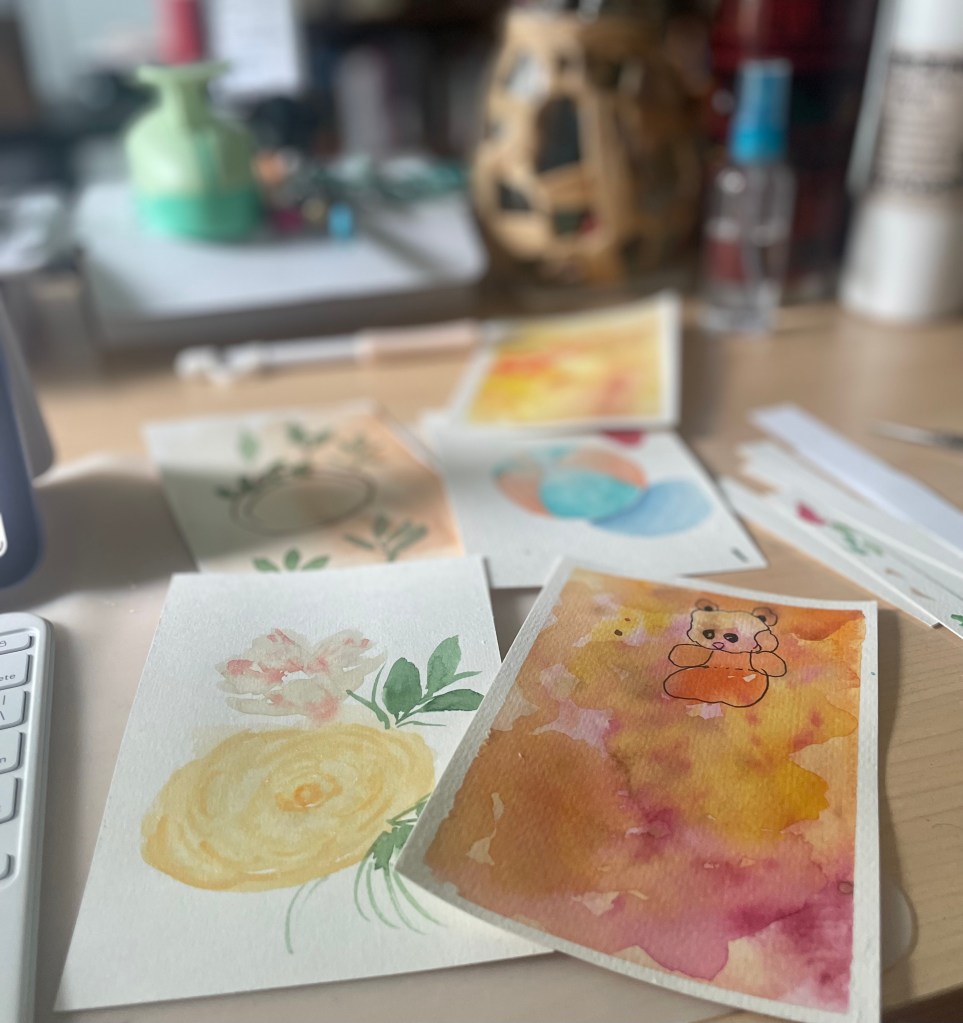
The image at the top are attempts of me just playing and experimenting . Some are messy, and some just ok. I can cut out the things I like and use them as ephemera in my junk journal. I can also reuse the back and paint on it. And the scraps I can use to make a color palette and test colors and even those can be used for something.  I am human I do make mistakes but I can still be a good steward of the resources God has provided.

As I continued reflecting on Proverbs 12:27, another verse came to mind — Philippians 1:6.

I think there is another layer to this verse that God is revealing to me, one that goes beyond what we do with the things He has placed in our hands.

If this encouraged you today, consider subscribing so you don’t miss Part Two. Also look for me on substack, Facebook and Instagram, Until then Anchor in Hope.

encouragement, hope, prayer, Uncategorized

Anchored in the Silence

Silence. It can be deafening sometimes. It can be uncomfortable. Many times in conversation we feel the need to fill the pauses. Many times silence speaks louder than words. 

Psalm 46:10  – “…Be still and know that I am God…” In Hebrew,  according to biblehub.com “Be still” means sink, relax. Sometimes that can be the hardest and the last thing I want to do. 

Yet, it’s in the chaos, in the storm I need to be still. Jesus isn’t always going to calm the waters, maybe not right away, maybe in a while – in His time.

Most times, even when I am choosing to be still, shutting out the wandering thoughts, the to do list, the what if’s, the noise of the day – it’s hard. Focusing is hard especially after a migraine my brain is foggy and tired. All I can think about is what I need to catch up on.

Being still and sitting in silence to me is like staring at a blank canvas or a blank page in a journal. It can be paralyzing and scary. Why is it my mind can blank at that but in silence I can come up with the worstest (it’s a word, I just made it up) scenarios. But that is neither what I want to write about, paint on a canvas or think about. Philippians 4:8 – “Finally, brethren, whatever things are true, whatever things are noble, whatever things are just, whatever things are pure, whatever things are lovely, whatever things are of good report, if there is any virtue and if there is anything praiseworthy—meditate on these things.” 

“Meditate on these things.” Prayer is a form of meditation, just remember to leave some space for God to respond. Recalling scripture and God’s faithfulness are always a good things to meditate on. 

Maybe silence isn’t meant to be filled. Maybe it is meant to be surrendered. (There’s that word again).

The blank space that feels uncomfortable, the pause that feels awkward, the stillness that makes our minds race,  those are often the very places where God invites us to meet Him.

An anchor does not prove its strength when the waters are calm. It proves its strength when the storm comes and the waves are pulling hard. Maybe being still is not about having a quiet life or a quiet mind. Maybe it is about knowing where we are anchored when life is anything but quiet.

So today, I want to practice sitting in the silence,  not because I have everything figured out, not because the noise has disappeared, but because I know Who is there with me.

“Be still and know…”

Not be still and understand everything.
Not be still and have all the answers.
Just be still and know.

Know that He is God.
Know that He is faithful.
Know that even in the silence, He is near.