

art, Design for Life, hope

Design for Life: Proximity – The Power of Drawing Near

Proximity is a principle of art and design that describes the spatial relationship between elements. The distance between objects can communicate connection or separation. It can help organize information, establish importance, and give a design structure.

Proximity generally serves two purposes:

1. Creating connection. Grouping related elements together helps communicate that they belong together. It creates organization, establishes hierarchy, and gives a design shape.

2. Creating separation. Placing unrelated elements farther apart communicates that they don’t belong together. Separation can also help break up information and make a design easier to understand.

In other words, proximity helps communicate a message through the relationships between the elements, whether they are grouped together or separated.

In the first example, the information is in the four corners of this business card. There is no clear hierarchy to help the reader understand what is most important or which details belong together.

In the second example, related information is grouped together, making the business card easier to read and understand. The content hasn’t changed, but the arrangement makes all the difference. All the related info is grouped together. The owner’s name and the name of the business are on the left and the contact information is on the right.

The same principle can apply to our lives.

If we live our lives in close relationship with God, our lives begin to reflect that connection. The things we draw near to influence us, shape our priorities, and often become evident in the way we live.

James 4:8 gives us this invitation:

“Draw near to God, and He will draw near to you.” (KJV)

But what does drawing near to God actually look like? How do we cultivate that closeness in the middle of everyday life?

In what ways do you feel closer or connected to God? How do you draw near to Him in your daily life? What helps you stay mindful of His presence?

The second part of James 4:8 says:

“Wash your hands, you sinners, and purify your hearts, you double-minded.” (NIV)

Impure hearts and double-mindedness are some of the things that can keep us from experiencing the closeness God desires. But I don’t think it’s always sin itself that gets in the way. Sometimes it’s simply distraction.

Distractions aren’t necessarily sinful, but they can blur our priorities and, if left unchecked, lead us away from the closeness God desires for us.

Over time, I’ve noticed a few things both in my own life and in others that happen when we intentionally draw near to God.

1. He draws near to us.

James 4:8 reminds us, “Draw near to God, and He will draw near to you.”

We are separated from God by sin, but His desire has always been for relationship with us. He’s the One who provided the way through Jesus Christ. God loves us so much that He sacrificed His Son so that we could come near to Him and live in relationship with Him.

Hebrews 4:16 (NKJV) reminds us:

“Let us therefore come boldly to the throne of grace, that we may obtain mercy and find grace to help in time of need.”

We don’t have to approach God timidly or wait until we have everything figured out. Through Jesus, we can come boldly before Him. We can bring our needs, our struggles, our questions, and even our distractions to the throne of grace.

We can live confidently in the closeness He has made possible.

2. We begin to develop Christlikeness.

You can often recognize family members by their mannerisms or speech. Even adopted children begin to mirror their families over time, they pick up phrases, gestures, and habits simply through closeness and living in the same house.

The same happens in our relationships and friendships. The more time we spend with someone, the more we begin to reflect parts of them.

My bird even repeats some of my phrases, like “I gotta check my email” or “Time to go to bed now” simply because she’s heard me say them so often.

In the same way, when we spend time with God, we begin to reflect His character, His words, and His ways. The more we spend time with Him, the more we become like Him.

It’s not about trying to imitate someone from a distance. It’s about knowing Him, walking with Him, and allowing His Word and His Spirit to shape who we are.

3. Others begin to notice.

People will start to see our faith in our reactions and behavior. When we choose kindness over retaliation, or refuse to gossip, others take notice.

They might wonder, “What’s different about her?” or “Why doesn’t she respond the way others do?”

That quiet difference speaks volumes, it points to the One we’ve spent time with.

One passage that comes to mind is the story of Mary and Martha. Mary chose to sit at the feet of Jesus, there’s no closer place to be. Her sister Martha was caught up in preparation and busyness, but Mary chose presence and proximity over activity.

In the midst of chaos, she prioritized proximity to her Lord.

That’s God’s design for our lives too, to stay near Him. Some days it’s easier than others, but the promise remains: when we draw near to God, He draws near to us.

Reflect

1. Are there certain times, places, or practices that make you more aware of His presence?

2. How can you intentionally “draw near” to Him this week?

3. How can you choose to “sit at the feet of Jesus” amid your own busyness or chaos?

Sometimes the most important thing we can do isn’t add something else to our lives, but draw closer to the One who matters most.

art, Design for Life, encouragement, hope

Design for Life: Contrast

“Do not be conformed to this world, but be transformed by the renewal of your mind, that by testing you may discern what is the will of God which is good and acceptable and perfect.”
Romans 12:2 (ESV)

One thing I’ve learned from Bob Ross is that to show dark, you need light, and to show light, you need dark. That has always struck a chord with me, not just in applying it to my art, but to my life in general.

When I want something to stand out in a piece of art or a design, I use contrast. I might place a light object against a dark background, use a larger font to draw attention to a particular word, or make a certain text bold while keeping the surrounding text lighter. These differences help direct the viewer’s attention and create visual interest.

Let’s look at an example.

Template from Canva

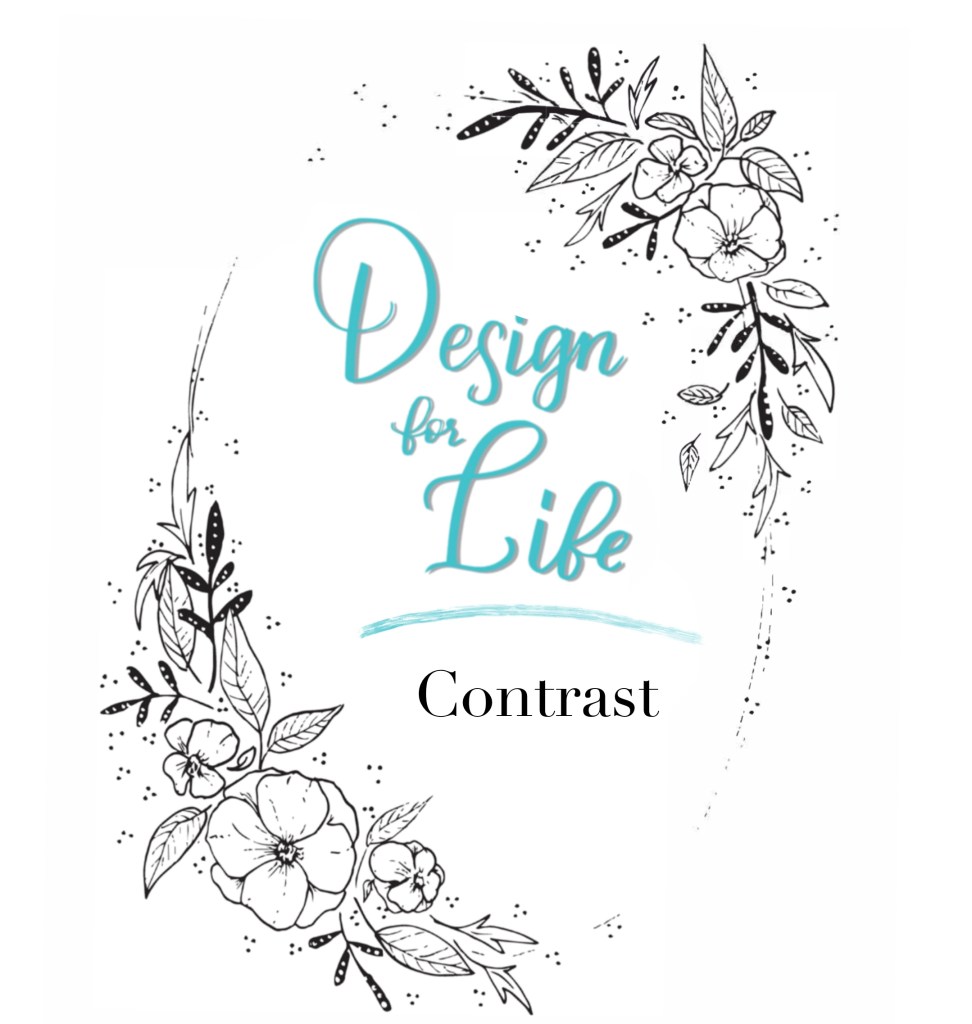
I’ve taken the same newsletter template and created two versions. The information, wording, and photographs are exactly the same, but I’ve changed the overall design.

In the original version, the large Breaking News headline immediately catches your attention. The different background sections help separate the information, and the variations in text size and weight guide your eyes through the page.

In my altered version, I reduced some of those differences. The background is more uniform, and the headline no longer carries the same visual emphasis. The information is still there, but the overall design has a different impact.

Neither version changes the message. What changes is how our eyes respond to it. That’s the beauty of contrast! It helps certain elements stand out rather than allowing everything to blend together.

But what does this have to do with our walk with Jesus?

Our lives should reflect a contrast to the world around us.

Romans 12:2 tells us not to conform to this world, but to be transformed by the renewing of our minds. As we grow in our relationship with Christ, our thoughts, attitudes, and actions begin to reflect Him. We don’t become perfect, and we certainly don’t always get it right, but there should be a difference.

Think about how we respond to others. When the world responds with anger, we can choose forgiveness. When the world looks out for itself, we can look for opportunities to serve. When the world is divided, we can choose to love. When life is filled with uncertainty and chaos, we can experience a peace that others might not understand.

Remember Matthew 25:40, where Jesus speaks about doing for “the least of these.” When we love others, especially those who are difficult to love, and when we forgive rather than hold onto offenses, we reflect something different. Not so that people will notice us or think more highly of us, but so they might see God’s love through us.

Just as contrast in art draws attention to something, a life being transformed by Christ can stand out in a world that often operates differently.

God created each of us differently. We have different personalities, gifts, talents, and ways of serving. We don’t have to look alike, think alike about every little thing, or have the same abilities to be united in Christ.

In the world, our differences can sometimes be viewed as conflict or division. But within the Body of Christ, those differences can complement one another. We can be different and still work together, each serving a purpose in the body.

I love that thought! We can stand in contrast to the world while remaining unified with one another in Christ.

Just as contrasting elements can bring unity and visual interest to a piece of art, our differences can strengthen the Body of Christ when we are centered on Him.

Perhaps that’s the contrast the world needs to see: people who are different from the world, yet united in Christ.

Reflect

What areas of my life stand out as a “highlight” of God’s presence and transformation?

Like in art, where contrast makes things stand out, what “darkness” in my life has made God’s light even more visible?

If my life were a piece of art, what would be the focal point? What stands out in contrast, and what brings unity?

art, Design for Life, hope

Design for Life: When Art Meets Faith

What if the principles that make a work of art beautiful could also teach us something about how we live our lives?

Our Heavenly Father is the Master Artist, the Creator of all things. From the smallest living creature to the vastness of the universe, His creation reveals purpose, order, and incredible detail.

John 1:1–3 reminds us that all things were made through Him. Even the materials we use to create art, pigments from the earth, paper from trees, and fibers from plants come from what God has already created.

And what about us? Psalm 139:14 declares that we are fearfully and wonderfully made. Like a potter shaping clay, God forms each of us uniquely. We are not mass-produced or interchangeable. We are His creation, each with our own gifts, experiences, and purpose.

But God’s design for humanity didn’t end with creation. He knew sin would enter the world, and His plan of redemption was already in place. Through the death and resurrection of Jesus Christ, He made a way for us to be reconciled to Him and look forward to eternal life.

God has a design for life—and He has given us principles to help us live it.

In art, design principles are guidelines that help us create visuals that communicate effectively. But what if we looked beyond the canvas and applied those same principles to our walk with Jesus?

Throughout the Gospels, Jesus taught His followers how to live differently from the world around them. His instructions challenged their priorities, attitudes, and behavior. That makes me ask myself: What sets my life apart? Am I living in a way that reflects Christ, or am I simply blending in with the world?

That’s what this Design for Life series is about.

Here on The Kedge Anchor, we’ll explore how principles of design can offer meaningful illustrations for our walk with God. Art can teach us to see things differently. My hope is that this series will help us see our faith and the way we live it in a new light.

Let’s discover how the principles of design can point us toward a life designed to reflect Him.

Design for Life

“Give it to God,” “Lay it at His Feet.” What does that look like to you?

Photo by Sora Shimazaki on Pexels.com

Do you get frustrated when you’re struggling with something and someone says, “Give it to God,” or “Hand it over to God.?” What does that look like? Me being the visual person I am, being an artist and all, I need to know what that looks like or at least looks like for me. So, I imagine putting all my worries in a box, (probably an Amazon box), wrapping it in brown paper, labeling it “To: God – Worries” decorated with red hearts and tying string around it, then attaching it to an arrow and shooting up to heaven as another package comes down looking the same but labeled, “To Caryn – Peace, with Love, Your Heavenly Father.”

But I think there’s more to that. The visual helps me, but there’s a part B. Sometimes I find myself, usually unaware of myself grabbing and taking it all back from God where the worry and stress start all over again. Then there’s more prayer and I’m really earnest this time and then I decide I’m gonna pray everyday at the same time for this situation or person. That’ll do it!!! And then nothing so I ask others to pray. Not that we shouldn’t but sometimes I think the more prayer lists my prayers are on God is surely gonna hear it and answer it. And we should be persistent. Pray without ceasing, 1 Thessalonians 5:17. But maybe we need to come up for air and take a breath. God hears us, He knows what we need before we ask, Matthew 6:8. Be persistent in prayer, Romans 12:12 and Luke 18:1-8 (this is a parable to show persistence), it’s a general, overall command. It doesn’t say be persistent in giving God your specific worries. (I could be wrong here, so let me know what you think).

So most of my answered prayers have been when I just casually told God what was on my heart and gave Him my request and got so busy with other things, like life and serving and reaching out to others, just carrying on, that’s when I realize my prayer has been answered. Now I’m not saying this is how it is or how it is for everyone, this has just been my observation in my prayer life. But I do think it’s important to surrender our requests our worries to God and I also think that it’s important that we don’t obsess over our requests where they become an idol, “have no other idols before me”, Exodus 20:3.

I look at it this way; it’s tax season, most of us give all our tax info to an accountant, right? An expert, someone who knows what they are doing and are efficient at it, a pro. Most people just drop it off, they trust their accountant, their accountant knows them. So after dropping it off, they may go get coffee, run an errand or two, pick up the kids, go to soccer practice, go home, go bed and then a few days later the accountant calls and your taxes are done right and complete, perfect. Now you may or may not like the outcome. But you surrendered your information, you went about your business and then it was done. Kinda the same with our prayers. We hand them over to God we go about our business and then after a while, in His timing and sovereignty we get an answer. We can still be persistent, we can still ask others to pray, we just can’t make it an idol.

I don’t know what “giving it to God” looks like for you, it might look different. If so leave a comment what that may look like for you. It helped me to think of giving God my worries this way, I hope it helped you.

If this blog has helped you, please like and share and stay tuned at Caryn’s Corner on YouTube, I am working on a new video and can’t wait to share it.